
Some Thoughts from My Precinct Walk for Yes on Measure A
“Our beautiful city has many pleasures, but for some, it’s easy to forget how for far too many of our neighbors the good life we advertise to the world . . . is a distant dream.”

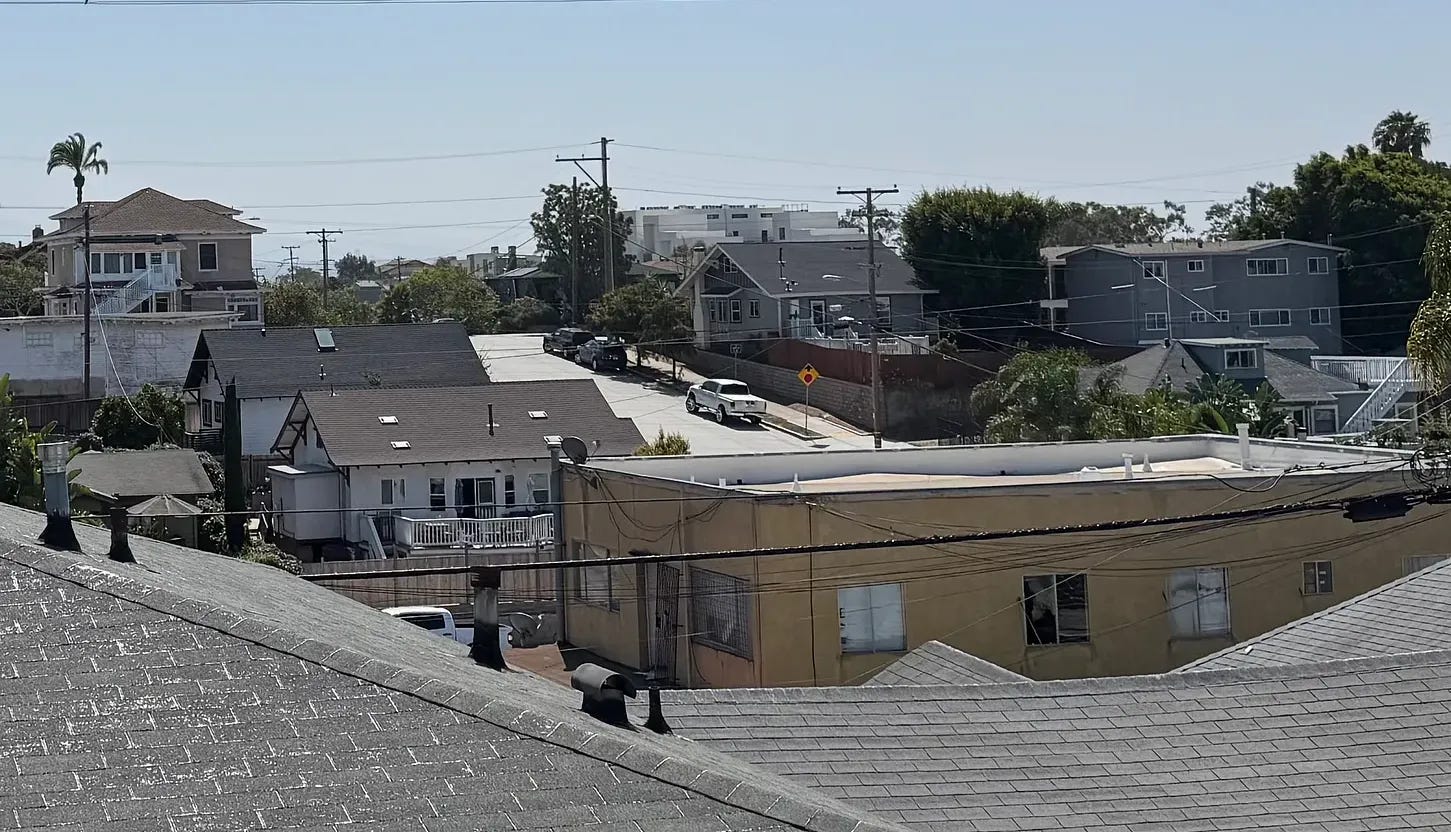
This weekend I spent several hours canvassing for Measure A in Golden Hill, and after spending a good amount of time simply leaving door hangers since many people were out enjoying the gorgeous day, I finally spoke to a fellow San Diegan. He greeted me warmly, shook my hand, and after saying he was happy to support a measure that would tax empty second homes, he commented, “I’ve been working at the VA for years now. I’m close to retiring, but all I have is this shitty little apartment. What good is that? I haven’t ever been able to buy a house or even rent one. It’s hard, you know? And then you’ve got rich people and companies buying out all these places for vacation homes, vacation rentals. Those used to be working people living there, working class folks.”
I nodded and said it was crazy that some of the little houses down the streets I had been walking, the kind that I had always thought I might be able to live in when I retired, were selling for over a million dollars. He matched my story with another about a luxury condo complex he’d gone by downtown advertising one bedrooms starting in the millions.
“Who the fuck can live there?” he asked. “Where do they come from? How can there be enough people to build so many of those places and nothing for people like me? It’s bullshit, you know? I’ll never have anything. Why did I ever move here? It makes you wonder what it’s all worth. I mean what the hell has my life been for if all I have is this for my garden?” He gestured toward a few pots sitting on top of the wall beside his front door.
“They’re nice,” I said smiling.
He laughed. “I don’t want to keep you. Good to meet you, neighbor. Have a nice day.”
I shook his hand again and said, “I don’t own a house either, but I’ve never measured myself that way. I’m sure you’ve done some good for people. That’s what matters.”
“Maybe so,” he said.
Later during the canvass, I ran into another woman watering a plant in her front yard and made my pitch for taxing rich people who own more than one home and leave their extra ones empty. “The idea is that they’d either have to rent it out or pay the tax and help contribute some revenue to the city budget at a time when they are about to cut basic services, arts funding, parks, and more.”
“Cheers to that,” she said. I mentioned that I decided that putting my kid through college was a better use of my family’s resources than crushing our budget by buying a house.
“Me too,” she said. “Bet on the kids.” We agreed that it was unacceptable that our children were facing a future where those kinds of choices might only get starker.
“But all we have is each other,” she said smiling.
“Indeed,” I said as I thanked her and moved on.
Later that afternoon I was still haunted by the voice of the first man, kindly and good natured, but troubled by the fact that he felt he’d worked his whole life for nothing. He’d done his job and paid his dues, but the world didn’t have much to offer him in exchange for his hard work and doing what’s right. That’s a shame and it’s not the kind of city or society that we should feel proud of living in, whatever our circumstances may be.
Our beautiful city has many pleasures, but for some, it’s easy to forget how for far too many of our neighbors the good life we advertise to the world where happy, healthy people frolic on the beach before enjoying a fine meal and the sunset is a distant dream. Folks in faceless apartment complexes in Golden Hill or City Heights don’t come into the imaginations of opportunist politicians or angry NIMBYs in Point Loma and elsewhere. La Jolla and Shelltown may as well be on different planets. It’s an old story, but it’s still true.
I’ve spent a good portion of my working life as a scholar and writer documenting the San Diego tourists never see. It’s the San Diego that my students at City College live in, and the one I see on my early morning walks through the lovely, gritty streets of Sherman Heights or the edges of downtown. At present, it seems as if much of the progress we’d thought we’d made in beginning to recognize and address the complex realities faced by San Diegans who don’t fit the postcard reality is in jeopardy. Some of us seem nostalgic for a city that never existed but whose imaginary pull just might drag us in a reactionary direction where those who have always had enough are made even more comfortable and happy at the expense of those who keep the tourist plantation running.
Here’s hoping that doesn’t happen and I’ll try do what I can to help prevent it, one door at a time.

More on Measure A
Measure A creates more homes for working San Diegans by taxing greedy corporations and investors who hoard homes in the City of San Diego and keep them empty in the middle of a housing shortage. Under Measure A, home hoarders must put homes back on the market for sale or rent or pay a tax to offset the impact of empty homes in our neighborhoods.
Measure A will help address the housing crisis in the city. Renting or buying a home in San Diego has become unaffordable for working families. Meanwhile, more than 5,100 homes sit vacant for most of the year — held by corporations, out-of-state investors, and absentee owners — while everyday San Diegans compete for too few homes, driving up rents and prices for everyone.
This measure incentivizes empty-home owners to put vacant homes back on the market during this housing shortage. Those who put their property back into use pay nothing. Those who keep homes empty pay an annual tax starting at $8,000 per vacant home, with a surcharge for corporate owners. The millions of dollars in revenue generated from the tax will pay for the services all San Diegans depend on, with independent financial audits and full public transparency over every dollar spent.
The facts about Measure A are that it:
Puts empty homes back on the market. More supply means lower rents & purchase prices.
Collects revenue for essential city services, tracking & auditing every dollar.
Ensures 99% of San Diegans pay nothing. Only vacant investor-owned homes are taxed.
Rental properties are not affected at all. Short-term rental properties are not subject to the tax.
Empowers voters to end the tax any time.
All primary residences are exempt
All long-term rentals are exempt
There are hardship protections that cover military deployment, death, medical emergencies and more.
And most importantly, Measure A is a progressive rather than regressive tax that impacts fewer than 1% of San Diego homeowners.
Thank you, Jim. It's time the rich pay their fair share of taxes.
The only people who say Measure A is supposed to build affordable housing are the people against it, who likely would squeal about any of "them" coming into their neighborhoods. And 'the market' is subject to supply and demand. Prices are coming down in communities where building all types of housing is encouraged.